Your shopping cart is empty!


MENU
Your shopping cart is empty!
Choosing an interior wall finish is no longer limited to paint, wallpaper or conventional timber. In modern Kenyan homes and commercial spaces, decorative wall panels can introduce texture, depth, warmth and a more finished architectural appearance without requiring a complete structural renovation.
Among the options available today, fluted wall panels, WPC panels and 3D wall panels are particularly useful for feature walls, TV backgrounds, bedrooms, reception areas, restaurants, offices and hospitality spaces. However, they are not interchangeable. Their appearance, material construction, moisture performance, installation requirements and suitability for different rooms can vary considerably.
For buyers searching for fluted wall panels in Kenya, the most important question is not simply which design looks best. It is which panel material and fixing method make sense for the wall, room conditions, maintenance expectations and overall interior scheme.
Ali Glaziers Flooring Solutions supplies interior finishing materials for projects in Nairobi, Eastleigh, Malindi and other parts of Kenya, alongside flooring and hardware solutions. You can explore the main Ali Glaziers range or browse the company's interior and flooring product categories when planning a complete interior upgrade.
Fluted wall panels are decorative panels with repeated vertical grooves that add texture, shadow and architectural depth to an otherwise flat wall. They are particularly effective behind TVs, beds, reception desks and other feature areas where the objective is to create a strong visual focal point.
Fluted panels are among the most recognisable contemporary wall finishes in Kenyan interior design. The defining characteristic is the repeated linear profile, usually running vertically from floor to ceiling or across a selected section of wall.
The grooves create alternating areas of light and shadow. This means the wall can look different depending on the direction and intensity of natural or artificial light.
Ali Glaziers' catalogue includes fluted panel designs in different widths, lengths, colours and finishes. For example, listed fluted products include 170 mm × 2.8 metre panels, while other designs are available at 170 mm × 2.9 metre and 200 mm × 2.9 metre dimensions. A solid WPC fluted model is listed at 118 mm × 2.5 metres. These differences matter when calculating coverage, cutting requirements and the number of panels required for a project.
The available range also includes PVC fluted designs and solid WPC models, so buyers should not assume that every product marketed as a "fluted panel" has exactly the same construction.
A fluted panel is primarily a design format, while WPC describes a material construction. This distinction is important.
A WPC panel can be fluted, but not every fluted panel is necessarily WPC.
For a closer look at available designs, you can browse the fluted wall panel range.
A feature wall does not need to cover every wall in a room. In many cases, one carefully selected wall creates a stronger result than covering the entire room.
Common applications include:
The vertical pattern can also make a wall appear taller, which is useful in rooms where the ceiling height is visually limited.
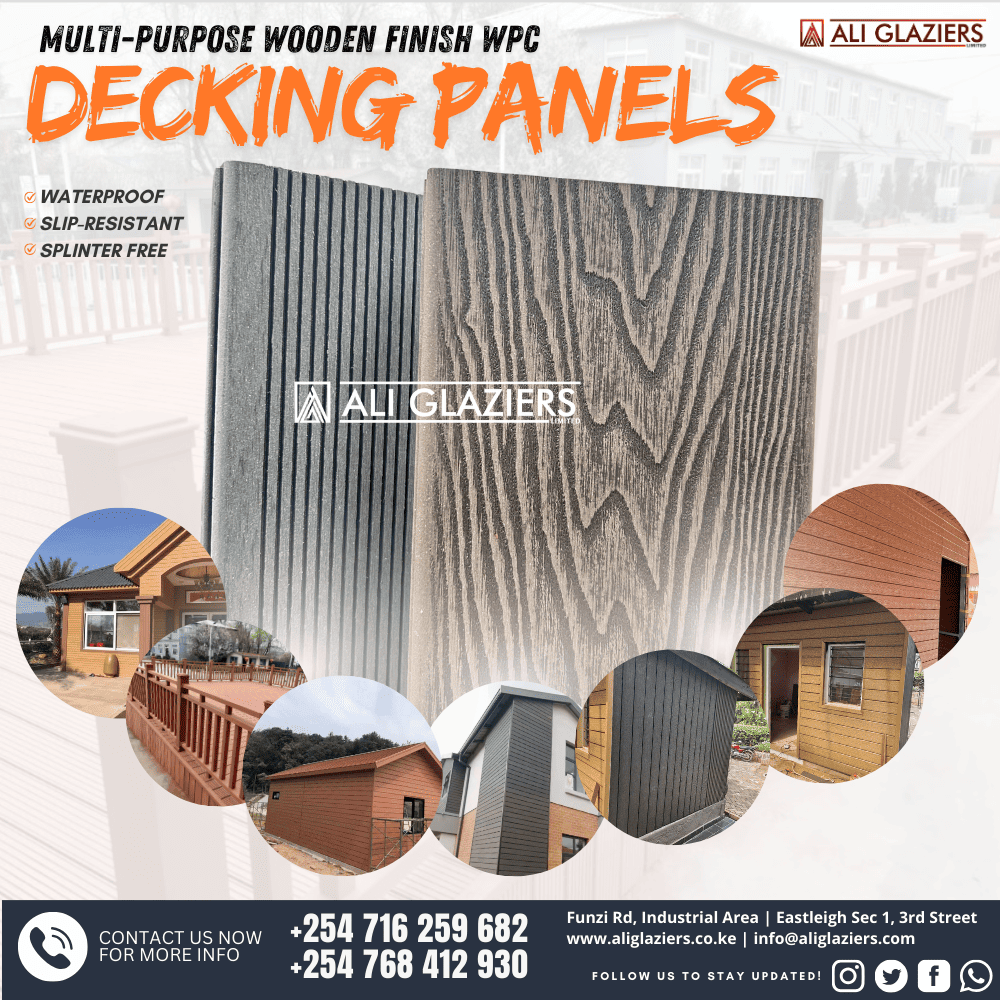
WPC means Wood Plastic Composite, a material that combines wood-based fibres with polymer components to create a decorative panel with a wood-like appearance and improved resistance to moisture and everyday wear. WPC is particularly useful where the buyer wants the appearance of timber without the maintenance demands associated with untreated natural wood.
WPC is a material rather than a specific visual pattern.
The "wood" component provides part of the appearance and composition, while the polymer component contributes to the engineered characteristics of the finished product. WPC panels can be manufactured into different profiles, including fluted designs.
This makes the phrase WPC fluted wall panel more precise than simply saying "wood panel."
For Kenyan interiors, one of the practical attractions of WPC is its resistance to moisture compared with conventional untreated timber. This can be particularly useful in areas where humidity changes or occasional moisture exposure could affect natural wood.
Ali Glaziers lists solid WPC fluted panels designed for decorative applications and describes them as resistant to moisture, rot and pests. The listed solid model measures 118 mm wide × 2.5 metres high.
That construction can be useful for buyers who want a more substantial wall finish while maintaining a modern wood-inspired appearance.
However, moisture resistance does not mean that every WPC panel should automatically be installed in permanently wet locations. Wall-panel suitability should always be assessed according to the manufacturer's product specifications, the substrate and the exact room conditions.
Fluted describes the shape or surface profile, while WPC describes the material. A panel can therefore be both fluted and WPC, but fluted panels may also be produced from other materials such as PVC.
This distinction is one of the most important things to understand before purchasing.
Think of it this way:
Fluted = design/profile.
WPC = material.
Therefore:
Ali Glaziers' current range illustrates this distinction. The site lists PVC fluted wall panels as well as solid WPC fluted products.
This matters because buyers comparing quotations should compare the material, dimensions, construction, finish and installation requirements, not just the phrase "fluted panel."
3D wall panels are decorative panels with raised, recessed or sculpted patterns that create a three-dimensional visual effect. They are best suited to buyers who want a more pronounced decorative surface than the linear appearance of a conventional fluted panel.
3D wall panels can be used to create dramatic feature surfaces without relying on complicated masonry or custom-built wall treatments.
The patterns may imitate:
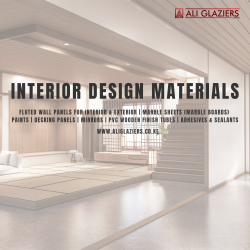
Ali Glaziers' interior-design range includes PU stone finish 3D panels, alongside fluted wall panels, marble-effect boards, PVC tubes and WPC decking panels.
This gives designers several ways to introduce texture into an interior without committing to natural stone or other heavy wall treatments.
The major visual difference is that fluted panels typically create a repeated linear rhythm, while 3D panels can create a much more varied pattern.
A fluted wall may feel orderly, vertical and minimalist.
A 3D decorative panel can feel bold, sculptural and highly expressive.
Choose fluted panels when you want clean vertical lines, WPC when material durability and moisture resistance are priorities, and 3D panels when you want a more sculptural feature wall. The best option depends on the room, design objective, substrate and expected maintenance.
| Feature | Fluted Panels | WPC Panels | 3D Wall Panels |
|---|---|---|---|
| Primary characteristic | Vertical grooves | Engineered wood-plastic material | Raised or sculpted pattern |
| Typical appearance | Linear and modern | Wood-inspired | Textured and decorative |
| Design impact | Elegant and architectural | Warm and contemporary | Bold and dramatic |
| Common use | TV walls, bedrooms, offices | Feature walls and interiors | Feature walls and decorative areas |
| Moisture performance | Depends on material | Generally strong moisture resistance | Depends on product construction |
| Maintenance | Generally low | Generally low | Depends on surface finish |
| Installation | Adhesive/mechanical fixing depending on product | Adhesive/mechanical fixing depending on product | Product-specific |
| Best design style | Minimalist/contemporary | Modern/natural | Statement interiors |
| Main consideration | Groove alignment | Material specification | Pattern and surface durability |
The table should be used as a starting point rather than a substitute for checking the specification of the exact product.
Panel dimensions determine coverage, wastage, installation time and the number of boards required. Ali Glaziers' listed fluted products include 170 mm × 2.8 m, 170 mm × 2.9 m, 200 mm × 2.9 m and a solid WPC option at 118 mm × 2.5 m.
Dimension is particularly important when calculating a feature wall.
A panel measuring 170 mm wide does not provide the same coverage per board as a 200 mm panel. Similarly, a 2.5 metre panel may require different cutting arrangements from a 2.9 metre panel when working with standard room heights.
| Panel Type | Example Plank/Board Dimensions | Thickness | Wear Layer Grade | Primary Consideration |
| PVC fluted panel | 170 mm × 2.8 m | Confirm for selected product | N/A | Decorative fluted profile |
| PVC fluted panel | 170 mm × 2.9 m | Confirm for selected product | N/A | Longer vertical coverage |
| PVC fluted panel | 200 mm × 2.9 m | Confirm for selected product | N/A | Wider board coverage |
| Solid WPC fluted panel | 118 mm × 2.5 m | Confirm for selected product | N/A | Solid construction and moisture resistance |
| PU stone finish 3D panel | Product-specific | Confirm for selected product | N/A | Sculpted decorative surface |
Important: Wear-layer grades such as AC4 are terminology normally associated with laminate flooring rather than decorative wall panels. They should not be assigned to a wall panel simply to complete a specification table. For wall panels, buyers should instead confirm the actual material, dimensions, thickness, surface finish and manufacturer's stated performance.
This is especially important when comparing products from different suppliers.
If you are also selecting flooring for the same room, you can search the wider Ali Glaziers catalogue and compare the flooring specification separately.
Select fluted panels when you want an understated, contemporary wall with strong vertical lines, and select 3D panels when the wall itself needs to become the main decorative feature. The choice should complement furniture, lighting, flooring and the size of the room rather than compete with them.
Interior finishes work best when they are considered as part of the whole room.
For example, a living room with heavily patterned furniture, decorative curtains and a highly textured floor may already have enough visual detail. Adding an aggressive 3D wall pattern could make the space feel crowded.
A simpler fluted finish may create better balance.
Conversely, a minimalist room with plain furniture and neutral flooring may benefit from a dramatic 3D wall.
WPC panels can be a practical choice for Nairobi interiors because their engineered construction offers moisture resistance and low-maintenance characteristics compared with untreated timber. They are particularly suitable for decorative feature walls where a wood-inspired finish is required without the ongoing care associated with natural timber.
Nairobi's climate is different from coastal Kenya, but indoor conditions still vary.
Kitchens, bathrooms, laundry-adjacent areas and poorly ventilated rooms can experience higher humidity than dry living rooms or offices.
A WPC-based decorative panel can therefore be attractive where moisture resistance is an important consideration.
However, wall preparation remains essential.
Moisture resistance in the panel does not correct a leaking wall, rising damp, persistent plumbing problems or water entering from behind the installation.
The substrate should be sound and appropriately prepared before installation.
WPC panels are particularly attractive for coastal interiors because their composite construction offers better moisture resistance than untreated natural timber. In humid locations such as Malindi, correct installation and ventilation remain essential even when the selected panel has moisture-resistant characteristics.
Coastal Kenya presents a different environmental challenge from many inland locations.
Humidity, salt-laden air and moisture can influence the long-term performance of interior materials.
This is one reason engineered materials can be attractive for coastal properties.
For homes, hotels, holiday apartments and restaurants in Malindi, Mombasa and surrounding areas, WPC decorative finishes can offer the desired wood-inspired aesthetic while reducing some of the maintenance concerns associated with natural timber.
The installation environment still matters.
A panel should not be treated as a replacement for proper waterproofing, ventilation or building maintenance.
If moisture is coming through the wall, the source should be addressed before decorative panels are installed.
Fluted wall panels are generally installed after accurate wall measurement and substrate preparation, followed by cutting, alignment and appropriate adhesive or mechanical fixing according to the selected product. Accurate vertical alignment is especially important because even small errors become noticeable across repeated grooves.
Installation quality can make the difference between a premium-looking feature wall and one that looks unfinished.
The general process involves:
Measure the full width and height of the wall.
Do not immediately order the exact calculated area without allowing for cuts and installation requirements.
Doors, windows, sockets, switches, corners and ceiling variations can all affect the amount of material needed.
The wall should be reasonably sound, clean and suitable for the chosen fixing system.
Loose paint, dust, dampness and unstable surfaces can affect adhesion.
Before fixing the first panel, determine where the grooves will fall.
This is especially important around:
Cutting should be precise and appropriate for the panel material.
Depending on the product, installation may involve suitable adhesive, mechanical fixing or a combination.
The exact fixing method should be based on the manufacturer's recommendations and the condition of the substrate.
Use appropriate measuring and levelling tools to maintain consistent lines.
Corners and exposed edges should be finished carefully so the installation looks intentional rather than simply cut around the room.
Fluted surfaces can help scatter reflected sound and may contribute to a more comfortable acoustic environment, but decorative fluted panels should not be treated as a substitute for engineered acoustic treatment. Their primary purpose remains decorative wall finishing.
The grooves interrupt a completely flat wall surface.
This can influence how sound reflects around a room.
For this reason, fluted panels are sometimes used in:
However, acoustic performance depends on the complete wall construction.
A decorative panel fixed directly onto a solid wall does not automatically provide the same acoustic performance as a purpose-designed acoustic panel incorporating sound-absorbing materials.
If sound control is the primary objective, the wall assembly should be assessed separately.
Fluted and WPC panels are generally low-maintenance decorative surfaces when properly installed, while 3D panels may require more careful cleaning because their deeper patterns can collect dust. The easiest option ultimately depends on the exact surface finish and depth of the design.
Maintenance should be considered before selecting a decorative wall.
A highly detailed 3D pattern may look impressive when installed but require more attention around recessed areas.
Fluted panels also have grooves, but the repeated linear pattern can be relatively straightforward to dust or wipe.
For everyday maintenance:
Commercial premises may require a more robust cleaning regime than residential interiors.
A restaurant, hotel or busy reception area should therefore select a surface with maintenance requirements appropriate to its traffic and cleaning schedule.
Wall panels should complement the floor rather than compete with it. When the wall is heavily textured, a quieter SPC, vinyl or laminate floor can create balance, while a relatively simple wall can support more visual character in the flooring.
The wall and floor are two of the largest visual surfaces in an interior.
Combining them without considering colour and texture can make a room feel visually busy.
For example:
Fluted wall + wood-look SPC
This creates a warm, coordinated contemporary interior. The key is to avoid choosing wall and floor finishes that are almost identical unless a deliberately continuous look is intended.
Fluted wall + neutral vinyl
This can provide a cleaner contrast where the wall is the main feature.
3D stone-effect wall + neutral flooring
This allows the textured wall to become the focal point.
WPC wall + laminate flooring
This can create a warmer, timber-inspired environment, provided the colours and grain patterns are coordinated.
You can explore current interior and flooring products when planning the wall-to-floor combination.
A feature section is often the safest choice when using strongly textured wall panels because it creates visual impact without overwhelming the room. Full-wall installation can work well in larger spaces or carefully controlled commercial interiors where the surrounding finishes are relatively restrained.
A TV wall is a classic example.
Instead of installing fluted panels throughout the living room, a homeowner might cover only the wall behind the television.
This creates a focal point while allowing painted or otherwise finished walls to provide visual breathing space.
Bedrooms can use the same approach behind the headboard.
In an office, a panel can be installed behind a reception desk or executive workspace.
For hospitality projects, larger areas may justify more extensive coverage.
The correct choice depends on room size, ceiling height, lighting and the amount of other visual detail.
Before purchasing, confirm the exact material, board dimensions, thickness, surface finish, intended application and recommended fixing method for the product you are considering. Also calculate coverage from the actual usable panel dimensions rather than relying only on a product name such as "fluted" or "3D."
A professional buying checklist should include:
Ask whether the product is:
Confirm:
Check:
Ask about:
Confirm whether the product is appropriate for:
Understand:
Two products can both be called wall panels while having very different materials, dimensions and performance characteristics. Buyers should therefore compare the actual specification and application requirements rather than choosing solely on appearance or price.
This is particularly relevant in Kenya's growing decorative-material market.
Terms such as "WPC," "PVC," "fluted," "3D," "stone effect" and "wood finish" describe different aspects of a product.
They should not be treated as interchangeable.
For example, a 170 mm × 2.8 metre fluted panel has different coverage characteristics from a 200 mm × 2.9 metre panel.
Similarly, a solid WPC panel is different from a hollow-profile product.
A PU stone-effect 3D panel should be assessed according to its own product specification rather than compared with WPC simply because both are used on walls.
Good buying decisions begin with identifying the actual product.
Wall panels can provide a wood-inspired appearance with potentially lower maintenance than untreated natural timber, while natural timber remains attractive for buyers who specifically want genuine wood grain and material character. The better choice depends on the desired appearance, maintenance expectations, moisture conditions and project budget.
Natural timber has a distinct advantage: it is genuinely natural.
Every board can have unique grain variation, colour and character.
However, timber may require:
WPC is an engineered alternative designed to reduce some of these maintenance concerns.
For a modern Kenyan apartment, office or commercial interior, the consistency of an engineered decorative panel can also make it easier to achieve a uniform design.
Fluted, WPC and 3D wall panels can all work in commercial interiors when the selected product matches the traffic, cleaning and environmental conditions of the space. Reception areas, offices, restaurants, retail spaces and hospitality properties should prioritise durability, maintainability and consistent appearance.
Commercial applications can include:
In these environments, the wall is part of the customer experience.
A carefully selected feature wall can reinforce a company's visual identity and make an otherwise ordinary space feel more deliberately designed.
For commercial buyers, documentation is also important.
Ali Glaziers provides eTIMS-compliant invoices for business purchases, supporting proper accounting and tax documentation for eligible business expenses in 2026.
Businesses planning larger interior projects should also confirm product availability, quantities and delivery requirements before finalising the installation schedule.
Ali Glaziers combines decorative interior materials with flooring, hardware and other building products, allowing buyers to source multiple components of an interior project from one supplier. The company serves Nairobi, Eastleigh, Malindi and other locations through its delivery network.
Ali Glaziers' interior product range includes:
The company's interior-design product range specifically includes fluted wall panels, marble boards, PU stone finish 3D panels, PVC tubes and WPC decking products.
This makes it possible to consider wall finishes alongside the other materials used in the same project.
For buyers who want to compare the wider catalogue, view the current product selection.
You can also check current special offers before placing an order.
For specific product requirements, contact Ali Glaziers directly and confirm the latest dimensions, stock position and suitability for your installation.
Choose fluted panels for clean vertical texture, WPC for a durable wood-inspired finish with strong moisture resistance, and 3D panels for a more dramatic sculptural effect. If you are unsure, start with the room's function, moisture exposure, desired design intensity and maintenance requirements before comparing individual products.
A simple decision framework is useful.
Your priority is a modern, elegant feature wall with vertical lines.
They work particularly well behind:
You want a wood-inspired finish and place significant value on durability, moisture resistance and low maintenance.
WPC is particularly attractive for modern homes, offices and coastal interiors.
You want the wall to make a strong decorative statement.
3D panels can work particularly well where the rest of the room is relatively restrained.
You are working on a larger project.
Different finishes can be used in different rooms or zones.
For example:
The objective should be coordination rather than simply using as many textures as possible.
The water resistance of a fluted wall panel depends on the material and exact product specification. WPC and suitable PVC products can offer strong moisture resistance, but they should not automatically be treated as suitable for constant direct water exposure.
Always confirm the intended application of the specific product.
A moisture-resistant panel is not a substitute for waterproofing behind the wall.
Neither is automatically better for every project because WPC and PVC have different constructions and product specifications. Compare the exact dimensions, finish, intended application, durability characteristics and installation requirements before choosing.
The right choice depends on the project rather than the material name alone.
Yes, fluted panels are particularly suitable for bedroom feature walls and headboard backgrounds. Their vertical texture can add warmth and architectural interest without requiring a complete room renovation.
Yes, TV feature walls are one of the most common applications for decorative fluted panels. The panel should be installed on a properly prepared wall, with electrical outlets, brackets, cables and ventilation requirements planned before fixing.
3D wall panels can create strong visual impact in restaurants, but the selected surface should be appropriate for the cleaning regime and traffic level of the premises. Pattern depth and maintenance requirements should be considered before installation.
Wall panels can replace paint on selected feature surfaces, but they do not have to cover an entire room. Combining a decorative panel with painted walls often produces a more balanced interior.
Some wall panels can be installed over existing surfaces if the substrate is sound, clean, dry and compatible with the recommended fixing method. Existing dampness, loose finishes or unstable surfaces should be corrected before installation.
Yes, fluted panels can be used in offices, particularly on reception backgrounds, meeting-room feature walls and executive office walls. Their linear pattern can create a professional contemporary appearance without excessive visual complexity.
Professional installation is recommended for projects where alignment, corners, cutting and finishing are important to the final appearance. This is particularly valuable with fluted designs because inconsistent alignment can be immediately visible.
For most buyers, the best wall panel is the one that matches the room's function, climate, design style, substrate and maintenance requirements rather than simply the cheapest or most decorative option. Fluted panels provide clean architectural texture, WPC offers a practical wood-inspired composite finish, and 3D panels provide stronger sculptural impact.
When choosing fluted wall panels in Kenya, start with the wall rather than the product.
Measure the available area.
Check the substrate.
Consider Nairobi's indoor conditions or the higher humidity associated with coastal locations such as Malindi.
Decide whether the wall should be a subtle accent or the main feature of the room.
Then compare panel material, dimensions, thickness, finish, fixing method and maintenance requirements.
For fluted panels, pay close attention to board width and length because these directly affect coverage and the visual rhythm of the finished wall. Ali Glaziers' listed examples include 170 mm × 2.8 metre, 170 mm × 2.9 metre and 200 mm × 2.9 metre fluted panels, as well as a 118 mm × 2.5 metre solid WPC fluted model.
Do not apply flooring terminology such as AC4 wear grade to wall panels unless the particular product is genuinely manufactured and classified under that system. Flooring specifications and wall-panel specifications serve different purposes.
Finally, think about the complete interior.
A beautiful wall finish will look better when coordinated with flooring, lighting, furniture, doors and other architectural elements.
Ali Glaziers can help buyers compare interior finishing options alongside flooring and hardware requirements, with eTIMS-compliant invoices available for business purchases and delivery arrangements serving Nairobi and other locations across Kenya.
Ali Glaziers Limited is a one-stop hardware and flooring shop supplying decorative wall finishes, flooring and related building materials for residential and commercial projects.
Nairobi – Funzi Road: +254 716 259682
Eastleigh Branch: +254 722 522452 | +254 723 354299
Malindi Branch: Imadi Shopping Mall | +254 722 671352
Email: [email protected]
Delivery: Same-day in Nairobi and next-day delivery to Mombasa, Kisumu, Eldoret, Nakuru and other destinations, subject to availability and delivery terms.
Visit Ali Glaziers online to explore available interior, flooring and hardware solutions, or contact the team for product guidance before starting your project.


-250x250.png)